Protective Coatings that Control Oxidation/Decarburization
Protective Coatings that Control Oxidation/Decarburization
Surface Protection During High-Temperature Processing
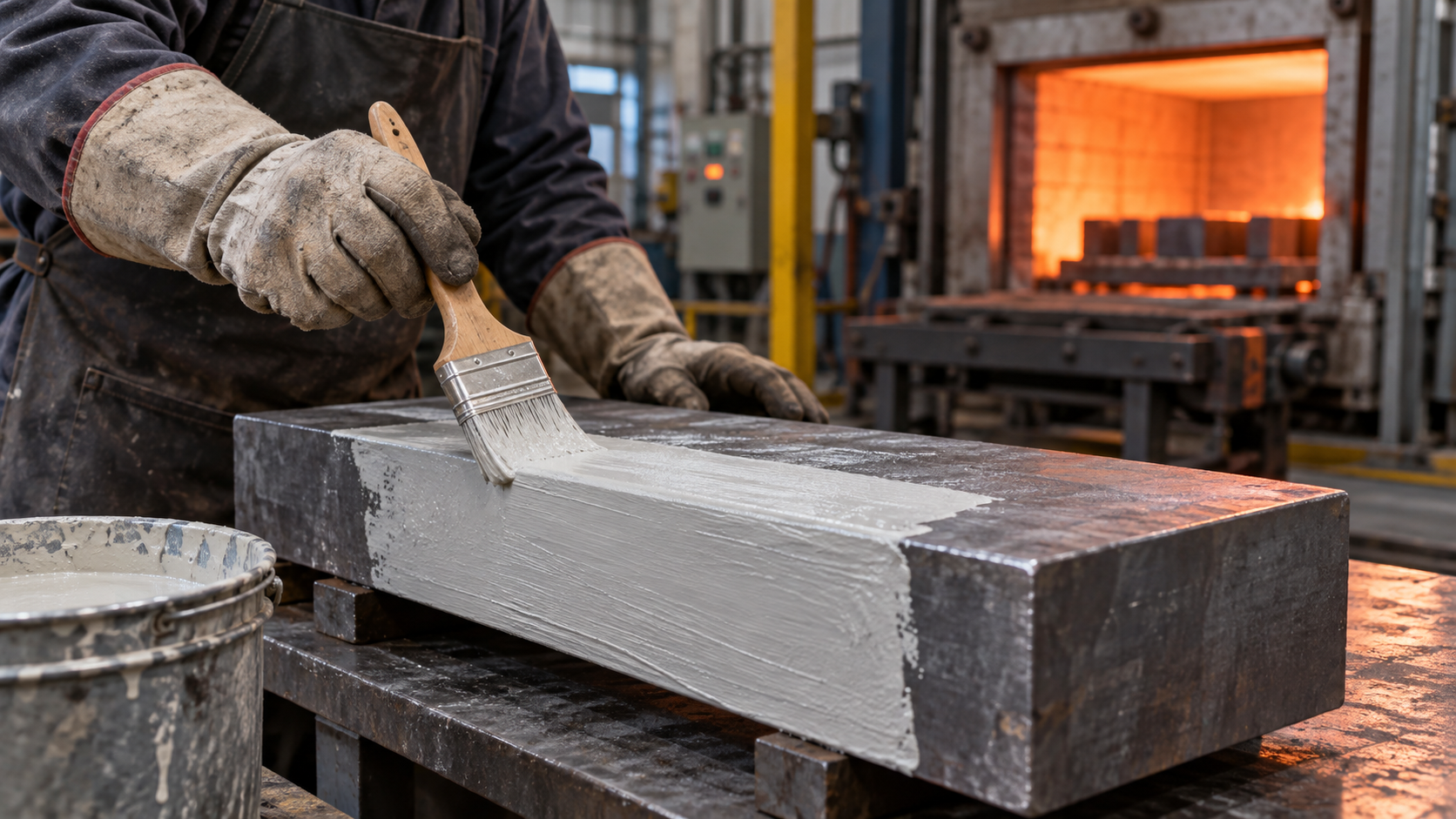
Heating can expose metals to atmospheres that cause oxidation, scale formation, and unwanted surface changes. Advanced Technical Products formulates Oxy-Shield protective coatings to help control these effects during hot working and heat treatment.
Applied before heating, these water-based coatings help limit gas exchange between the material and its surrounding atmosphere. Selected formulations support processing temperatures up to 2400°F, with suitability determined by the material, exposure time, and operating conditions.
Protection Matched to Your Material
ATP offers protective formulations tailored for a wide range of industrial metals and critical materials:
Tool Steels
Decarburization prevention and scale control during high-temperature heat treatment.
Stainless Steels
Defense against surface scaling, chromium depletion, and oxidation at elevated furnace temperatures.
Carbon & Low-Alloy Steels
Limits heavy iron oxide scale build-up and preserves critical surface carbon content.
Nickel Alloys
Oxidation barrier and surface protection against demanding thermal atmospheres.
Titanium Alloys
Retards hydrogen penetration and controls brittle alpha-case formation during hot working.
Zirconium Alloys
Surface barrier guarding reactive alloys from atmospheric contamination and surface degradation.
Molybdenum
High-temperature oxidation barrier safeguarding refractory metal processing and forming.
Graphite
Oxidation barrier for graphite electrodes, tooling, and critical components in thermal furnaces.
Common Applications
Formulated to safeguard valuable alloys across primary metalworking, forging, and thermal processing operations:
Forging and Rolling
Help limit scale formation before hot working and reduce the risk of scale becoming embedded in the surface.
Hot Extrusion
Protect supported metals during furnace heating before extrusion.
Annealing and Other Heat Treatments
Control surface exposure during heating cycles where oxidation or decarburization can affect subsequent processing.
Titanium Hot Working
Selected coatings help control hydrogen penetration and alpha-case formation during appropriate titanium processing applications.
Graphite Protection
Formulations are available to improve oxidation resistance in suitable graphite applications.
Reduce Surface Loss and Finishing Requirements
By limiting oxidation and scale, an appropriate coating can help improve material yield, reduce surface defects, and decrease secondary finishing requirements.
Benefits depend on the substrate and process. These coatings support forging, heat-treating, primary metals, and applicable aerospace manufacturing operations.
Application Conditions Matter
ATP protective coatings can be sprayed, dipped, flow coated, or brushed. Surface cleanliness, coating thickness, and drying conditions influence performance.
The required film thickness depends on the material, processing time, and temperature.
ATP’s oxidation-resistant coatings guide provides further application and material information.
Discuss Your Protection Requirements
Share your alloy, heating cycle, furnace atmosphere, and current surface-quality concerns. ATP can discuss a formulation for your hot-working requirements.